
 7 minutes
 2025-07-14
 Insights
Imagine a high-ranking executive who learns about a company’s upcoming bankruptcy filing and sells their stock before the news becomes public. This act undermines the integrity of financial markets and is a classic example of insider trading.
But what is insider trading exactly, and why is it such a critical issue for companies listed on stock exchanges? In this article, we’ll explore the definition of insider trading, discuss its implications in the EU and US contexts, and provide practical insights on how to prevent insider trading within your organisation.
Insider Trading: What Does It Mean?
Insider trading refers to buying or selling securities of a publicly traded company based on material, non-public information about the company. This practice gives individuals unfair advantages over other investors, undermines market integrity, and is one of the most closely monitored aspects of financial regulation globally.
In legal terms, insider trading can be classified into two main categories:
- Legal Insider Trading: This occurs when corporate insiders, such as executives or employees, trade company stocks in compliance with regulations, ensuring that all necessary disclosures are made. It reflects legitimate activity within the bounds of regulatory frameworks.
- Illegal Insider Trading: This happens when individuals use confidential information to trade securities, violating laws designed to ensure a level playing field. The repercussions for illegal insider trading are severe, including hefty fines, imprisonment, and reputational damage.
An example of insider trading is when an executive sells company shares based on knowledge of an upcoming poor earnings report that has not yet been disclosed to the public. In contrast, a legal example would be when an executive purchases company stock during an open trading window and discloses the transaction according to regulatory requirements, ensuring transparency and compliance.
What Constitutes Insider Trading?
Understanding what constitutes insider trading is essential for maintaining compliance with regulations. In most jurisdictions, insider trading is deemed illegal if the following elements are present:
- The individual involved is considered an “insider” or has access to inside information.
- The information in question is material and non-public.
- The individual uses this information to make trades or tips off others to trade.
It is important to note that regulators are increasingly vigilant, using sophisticated tools to detect patterns that suggest unlawful behaviour.
Insider Trading vs. Insider Dealing?
While the terms are often used interchangeably, insider trading and insider dealing can carry slightly different nuances depending on the jurisdiction.
In the EU, the term “insider dealing” is commonly used and refers broadly to the misuse of confidential information. The US predominantly uses “insider trading,” with an emphasis on securities violations.
Regardless of terminology, the underlying principles of fairness and transparency remain universal.
Types of Insider Trading
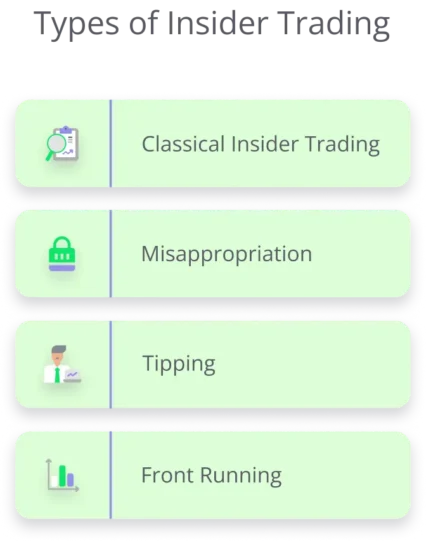
There are several types of insider trading that organisations need to be aware of:
- Classical Insider Trading: Involves company insiders such as executives, board members, or employees using non-public information for personal gain.
- Misappropriation: Occurs when non-insiders, such as consultants or lawyers, misuse confidential information they access during their professional work.
- Tipping: Happens when an insider shares non-public information with someone who trades on it, extending the chain of illegality.
- Front Running: Involves executing trades based on knowledge of large pending transactions that could impact stock prices. For example, a broker who trades ahead of a client’s large order violates regulations.
What’s an Insider and What Is Inside Information?
What’s an Insider?
An insider is an individual who has access to material, non-public information about a company. This includes executives, directors, employees, and sometimes external parties such as auditors, consultants, or legal advisors. The definition also extends to family members or associates who may be privy to confidential information through their relationships.
What Is Inside Information?
Inside information refers to any non-public, material data that could influence an investor’s decision to buy or sell securities. Examples include:
- Financial performance data, such as unpublished quarterly results.
- Merger or acquisition plans that have yet to be announced.
- Changes in executive leadership that signal strategic shifts.
- Pending legal actions or regulatory investigations.
EU vs. US Insider Trading Regulations
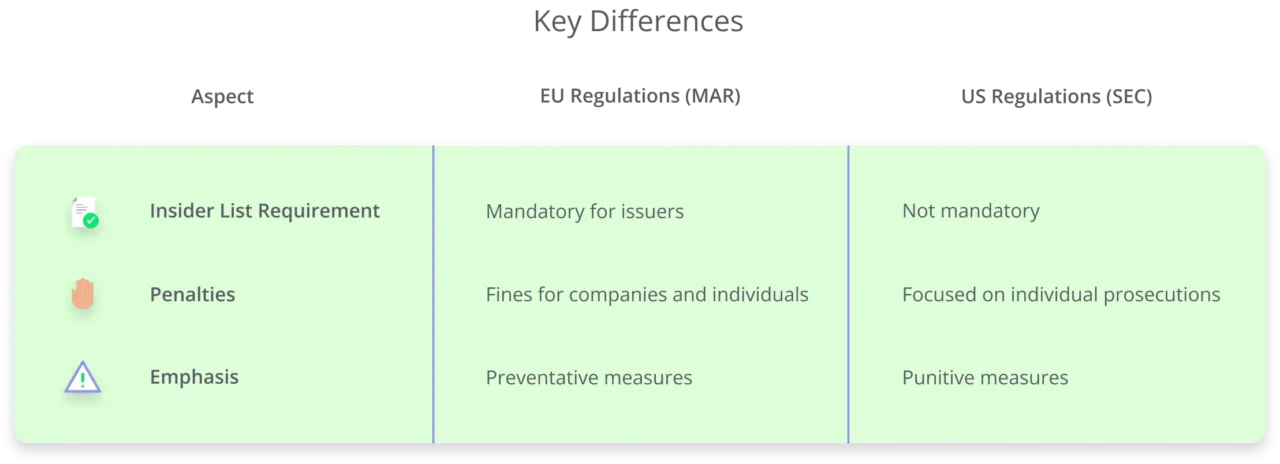
While insider trading is illegal in both the EU and the US, the regulatory frameworks differ significantly, as highlighted above. These differences highlight the importance of region-specific compliance strategies.
EU Perspective
The EU’s Market Abuse Regulation (MAR) governs insider trading. Key articles include:
- Article 17: Addresses the disclosure of inside information, requiring timely and accurate publication to maintain market integrity.
- Article 18: Mandates the maintenance of insider lists, specifying who has access to confidential information.
- Article 19: Regulates personal account dealings by persons discharging managerial responsibilities (PDMRs).
One unique aspect of EU regulations is that issuers must identify who is responsible for maintaining an insider list when required. This responsibility is crucial for accountability and is often scrutinized during regulatory audits. Non-compliance can result in significant fines and reputational harm.
US Perspective
In the US, insider trading is primarily regulated by the Securities Exchange Act of 1934 and enforced by the Securities and Exchange Commission (SEC). Unlike the EU, the US emphasizes prosecuting individuals for violations rather than imposing compliance obligations on companies. Cases are often high-profile, serving as deterrents for would-be violators.
Key Differences
How to Prevent Insider Trading
Implementing robust measures to prevent insider trading is critical for maintaining compliance and protecting your company’s reputation. Failure to do so can lead to severe consequences, including hefty fines, imprisonment for individuals involved, and significant reputational damage to the organisation.
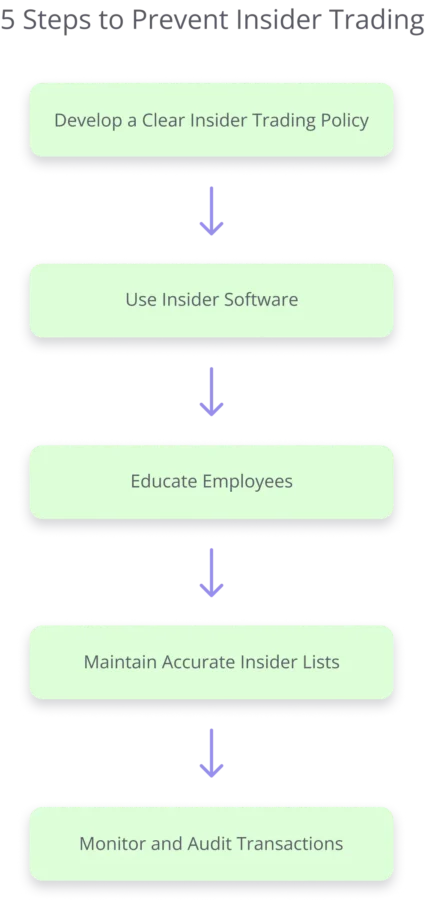
These outcomes can erode stakeholder trust, disrupt business operations, and result in long-term financial losses. Proactively addressing insider trading risks ensures legal compliance and safeguards the financial markets’ integrity and credibility. Here are practical steps:
1. Develop a Clear Insider Trading Policy
Create a comprehensive policy that outlines what constitutes insider trading, acceptable trading practices, and reporting requirements. This should be tailored to your jurisdiction and updated regularly to reflect regulatory changes.
2. Use Insider Software
Invest in insider software to monitor trades, maintain insider lists, and flag potential violations. Tools like those provided by Logwise streamline compliance and reduce administrative burdens.
3. Educate Employees
Regular training sessions are essential for helping employees understand how to avoid insider trading and the consequences of non-compliance. Scenario-based training can be particularly effective, illustrating real-world examples and reinforcing best practices.
4. Maintain Accurate Insider Lists
Ensure your organisation knows who is responsible for maintaining an insider list when required. This is crucial for EU-regulated entities. Keeping lists updated and accessible during audits demonstrates a commitment to transparency.
5. Monitor and Audit Transactions
Implement systems to track and review personal account dealings and other trades for signs of misuse. Regular audits help identify vulnerabilities and ensure adherence to policies.
How to Avoid Insider Trading: Best Practices
Avoiding insider trading requires proactive measures:
- Segregation of Duties: Limit access to confidential information only to those needing it. This reduces the likelihood of accidental or intentional misuse.
- Pre-Trade Approvals: Require pre-clearance for trades by insiders, adding a layer of oversight.
- Blackout Periods: Enforce restrictions during sensitive times, such as before earnings releases or major announcements.
- Anonymous Reporting Channels: Encourage whistleblowing for suspected violations. Providing safe, anonymous channels for employees to report concerns fosters a culture of accountability.
Conclusion
Understanding insider trading and implementing prevention strategies are vital for companies operating in regulated markets. To reinforce these strategies, companies should focus on clear policies, ongoing education, and advanced compliance tools.
Regular audits, accurate insider lists, and proactive monitoring effectively mitigate potential risks. By applying these steps, organisations can safeguard their operations, maintain investor trust, and uphold market integrity.

EU Listing Act – Implications for MAR and Insider Lists
 Compliance Regulations & Updates
The Act was published 14 November 2024 and entered into force on 4 December 2024. Its changes to MAR are rolled out in two waves, with three different effective dates: 4 December […]
 7 min
7 min May 27, 2026
 EU Listing Act – Implications for MAR and Insider Lists
The Act was published 14 November 2024 and entered into force on 4 December 2024. Its changes to MAR are rolled out in two waves, with three different effective dates: 4 December […]
 4 minMay 27, 2026
 EU Listing Act – Implications for MAR and Insider Lists – 4 December 2024
The Act was published 14 November 2024 and entered into force on 4 December 2024. Its changes to MAR are rolled out in two waves, with two different effective dates: 4 December […]
 3 minMay 27, 2026
 Revised Conditions for Delaying Disclosure
The delay mechanism (under Art. 17(4)) is retained, but one of the three conditions has been amended. The previous condition – that delay is “not likely to mislead the public” – is […]
 4 minMay 27, 2026
 Protracted Processes: Disclosure Only on the Final Event
Under the pre-June 2026 rules: Issuers have been required to disclose inside information arising at each intermediate step of a protracted process (such as e.g. ongoing merger negotiations, a capital raise, or […]