
 3 minutes
 2025-07-14
 Compliance Automation
Adhering to the EU Market Abuse Regulation (MAR) is non-negotiable for companies listed on stock exchanges, and creating and maintaining insider lists is a critical component of this compliance.
But what is an insider list, and why is it so significant under MAR? In this guide, we’ll break down the essentials of insider list information and explore the key MAR articles governing these lists to simplify your compliance process.
What Is an Insider List?
An insider list is a detailed record maintained by companies to track individuals with access to material, non-public, price-affecting information (inside information) about the organisation. This list is critical in preventing insider trading, safeguarding confidential information, and maintaining trust in financial markets.
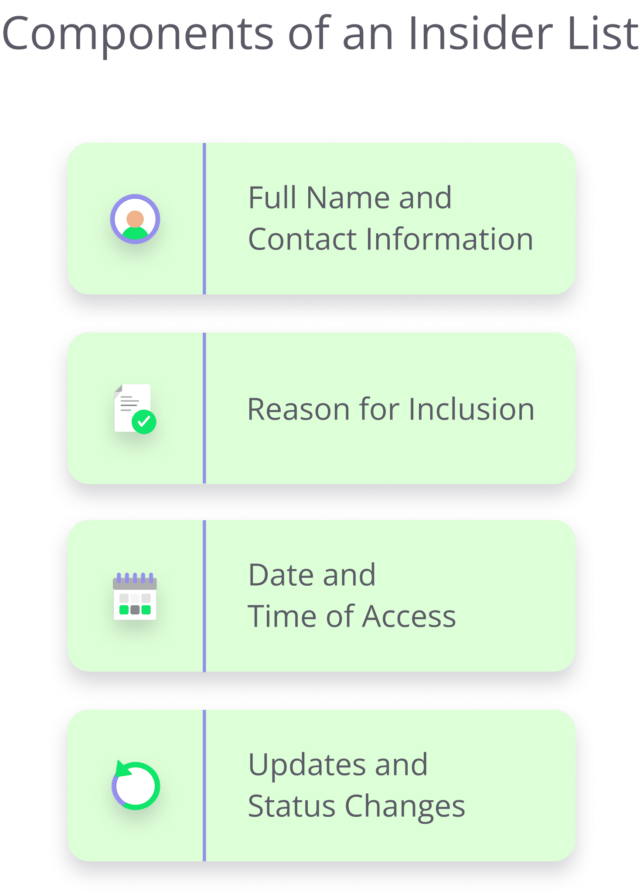
Insider lists under MAR are required to include specific details, such as:
- Full name and contact information of insiders.
- The reason for including the person on the list.
- The date and time they gained access to inside information.
- Any updates to their status, including when access was revoked.
Why Are Insider Lists Important?
Insider lists are not just a regulatory requirement; they serve multiple purposes:
- Regulatory Compliance: Ensuring adherence to MAR Articles 17, 18, and 19.
- Market Integrity: Preventing insider trading and safeguarding the fairness of financial markets.
- Transparency: Providing clear records for regulatory audits and investigations.
Which part of MAR Deals with Insider Lists?
MAR Articles 17 and 18 are the primary regulations governing insider lists:
- Article 17: Focuses on the disclosure of inside information, ensuring that companies publish material information promptly.
Article 18: Requires companies to maintain accurate and up-to-date insider lists and outlines the necessary structure and content.

Understanding Insider List Information
What Constitutes Inside Information?
Inside information refers to any material, non-public, price-affecting information that could influence an investor’s decision to buy or sell securities. Examples include:
- Pending mergers or acquisitions.
- Significant changes in financial performance.
- Executive leadership changes.
Permanent Insider Definition
A permanent insider is an individual who continuously has access to inside information due to their role within the organisation. Examples may include:
- Board members.
- Senior executives.
- Key employees in departments like finance or legal.
The Insider Management Process
Maintaining and managing insider lists requires a structured approach. Here’s how compliance officers can streamline the insider management process:
- Identify Insiders: Determine who qualifies as an insider based on their role and access to material information.
- Document Details: Capture required information such as names, roles, and the date they gained access.
- Monitor and Update: Regularly review and update insider lists to reflect changes in roles, responsibilities, or access.
Competent Authority Insider List Requirements
National competent authorities and the European Securities and Markets Authority (ESMA) require insider lists to be:
- Accurate and updated promptly.
- Stored securely to prevent unauthorised access.
- Available for review during audits or investigations.
Failure to comply can result in hefty fines, reputational damage, and even criminal charges for serious breaches.
Conclusion
By understanding what an insider list is and following best practices for insider management, organisations can navigate the complexities of MAR with confidence.
Logwise’s tailored solutions address these challenges by providing tools that automate insider list management, ensure regulatory accuracy, and reduce administrative burdens for compliance teams. Start simplifying your compliance processes today!

EU Listing Act – Implications for MAR and Insider Lists
 Compliance Regulations & Updates
The Act was published 14 November 2024 and entered into force on 4 December 2024. Its changes to MAR are rolled out in two waves, with three different effective dates: 4 December […]
 7 min
7 min May 27, 2026
 EU Listing Act – Implications for MAR and Insider Lists
The Act was published 14 November 2024 and entered into force on 4 December 2024. Its changes to MAR are rolled out in two waves, with three different effective dates: 4 December […]
 4 minMay 27, 2026
 EU Listing Act – Implications for MAR and Insider Lists – 4 December 2024
The Act was published 14 November 2024 and entered into force on 4 December 2024. Its changes to MAR are rolled out in two waves, with two different effective dates: 4 December […]
 3 minMay 27, 2026
 Revised Conditions for Delaying Disclosure
The delay mechanism (under Art. 17(4)) is retained, but one of the three conditions has been amended. The previous condition – that delay is “not likely to mislead the public” – is […]
 4 minMay 27, 2026
 Protracted Processes: Disclosure Only on the Final Event
Under the pre-June 2026 rules: Issuers have been required to disclose inside information arising at each intermediate step of a protracted process (such as e.g. ongoing merger negotiations, a capital raise, or […]