
 4 minutes
 2025-07-14
 Insights
For companies operating under the EU’s Market Abuse Regulation (MAR), maintaining compliance policies and procedures is crucial for upholding market integrity and avoiding significant penalties.
In this article, we outline 5 essential MAR compliance policies and procedures to help your organisation stay compliant and efficient in the coming year.
1. Insider List Management Procedures
Managing insider lists effectively is at the heart of MAR compliance. This process can be particularly challenging due to the need for accuracy, frequent updates, and secure data handling. Automated tools help address these challenges by providing real-time updates, reducing the risk of human error, and ensuring that insider lists remain audit-ready at all times. These lists track individuals with access to material, non-public information, ensuring transparency and accountability.
Key Steps to Comply with Insider List Requirements
- Document Details and Assessments: Keep track of information that may constitute inside information.
- Create Detailed Records: Maintain up-to-date lists including names, contact details, and the reasons for access.
- Utilise Automated Tools: Leverage technology to update insider lists effortlessly and ensure accuracy.
- Train Employees: Educate staff on the importance of insider lists to minimise human error and improve compliance with company policies and procedures.
By following these steps, organisations can streamline the insider list management process and demonstrate their commitment to MAR regulatory compliance policies and procedures.
2. Disclosure of Inside Information
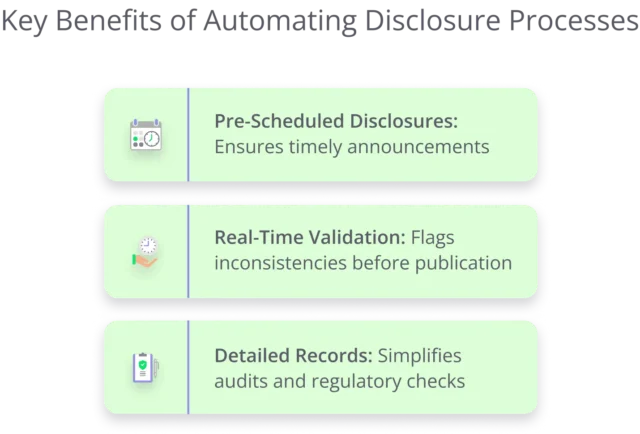
Under MAR, timely and accurate disclosure of inside information is mandated. Ensuring compliance requires a clear protocol for assessing, categorising, and disclosing such information.
Best Practices for Disclosure Policies
- Establish Assessment Protocols: Develop a process to determine whether information qualifies as inside information.
- Create Approval Workflows: Use compliance program policies and procedures to standardise how disclosures are reviewed and approved.
Monitor and Document Disclosures: Maintain detailed records to prove compliance during audits.
3. Personal Account Dealing (PAD) Policies
If not managed properly, employee trading activities can expose organisations to reputational and regulatory risks. A robust corporate compliance policy and procedure for PAD is essential.
Key Components of PAD Policies
- Pre-Approval Processes: Require employees to seek clearance before executing trades.
- Ongoing Training: Regularly educate employees on PAD rules to minimise violations.
With these safeguards, organisations can protect themselves from conflicts of interest and insider trading risks.

4. Policy Management Systems
Managing compliance with company policies and procedures requires a centralised approach to ensure consistency and accountability across departments.
How to Implement Effective Policy Management
- Centralise Policy Documentation: Maintain a single source of truth for all compliance-related policies.
- Ensure Accessibility: Make sure all employees can easily access and understand policies.
- Track Changes: Use automated systems to document updates and track compliance with evolving regulations.
- Schedule Automatic and Periodic Re-Confirmations: Ensure employees regularly acknowledge and re-confirm their understanding of policies to maintain compliance.
Centralised policy management systems not only reduce administrative burdens but also ensure alignment across the organisation.

5. Compliance Monitoring and Reporting
Regular monitoring and reporting are key to demonstrating compliance with MAR’s regulatory compliance policies and procedures.
Steps for Effective Monitoring
- Define Metrics: Establish KPIs to track compliance performance.
- Conduct Regular Audits: Schedule periodic reviews to identify and address gaps.
- Leverage Technology: Use compliance platforms to automate reporting and provide real-time insights into your compliance posture.
Monitoring processes not only help companies stay compliant but also position them as proactive and transparent to regulators. This transparency fosters trust with regulators, demonstrating a commitment to ethical practices, and strengthens relationships with investors by showcasing accountability and sound governance.
How Logwise Supports MAR Compliance
Logwise offers tailored solutions to help organisations comply with MAR compliance policies and procedures efficiently. For example, our Insider List Management tool automates updates, tracks access in, and ensures audit-ready records, making compliance seamless and reducing administrative burdens. Our tools provide:
- Automated Insider List Management: Simplify updates and ensure regulatory accuracy.
- Real-Time PAD Monitoring: Mitigate trading risks with structured processes.
- Centralised Policy Management: Ensure consistent compliance across all departments.
With Logwise, your organisation can navigate the complexities of MAR compliance with confidence.
To learn more about how Logwise can support your compliance efforts, contact us today or book a demo of our cutting-edge solutions.

EU Listing Act – Implications for MAR and Insider Lists
 Compliance Regulations & Updates
The Act was published 14 November 2024 and entered into force on 4 December 2024. Its changes to MAR are rolled out in two waves, with three different effective dates: 4 December […]
 7 min
7 min May 27, 2026
 EU Listing Act – Implications for MAR and Insider Lists
The Act was published 14 November 2024 and entered into force on 4 December 2024. Its changes to MAR are rolled out in two waves, with three different effective dates: 4 December […]
 4 minMay 27, 2026
 EU Listing Act – Implications for MAR and Insider Lists – 4 December 2024
The Act was published 14 November 2024 and entered into force on 4 December 2024. Its changes to MAR are rolled out in two waves, with two different effective dates: 4 December […]
 3 minMay 27, 2026
 Revised Conditions for Delaying Disclosure
The delay mechanism (under Art. 17(4)) is retained, but one of the three conditions has been amended. The previous condition – that delay is “not likely to mislead the public” – is […]
 4 minMay 27, 2026
 Protracted Processes: Disclosure Only on the Final Event
Under the pre-June 2026 rules: Issuers have been required to disclose inside information arising at each intermediate step of a protracted process (such as e.g. ongoing merger negotiations, a capital raise, or […]