
 8 minutes
 2025-07-14
 Compliance Automation
As regulatory frameworks become more complex and the need for transparency intensifies, companies are investing in robust compliance management software to meet these evolving requirements. This ensures they adhere to current policies, manage risk effectively, and optimize their business operations.
However, successfully integrating such compliance solutions into the current company processes requires careful planning, implementation, and ongoing maintenance to be truly effective. Selecting the best compliance management software, connecting it with the existing internal systems, and then adopting a culture within the company that uses these tools can be a challenge.
This article aims to provide helpful insight for each stage of this process, covering everything from key features to the benefits of using integrated solutions for managing compliance, selecting which specific types of software make the most sense for any given company or business model, onboarding and training employees, and thinking ahead in terms of future growth and scalability to get the most out of the investment.
Preparing for Compliance Management Solutions
Software for compliance management is digital tools that help businesses monitor, manage, and adhere to external regulations and internal policies. Depending on the specific circumstances of each individual company, this can be done in various ways, but it will often provide a single platform that centralizes access to the various features.
Benefits of Regulatory Compliance Management Software
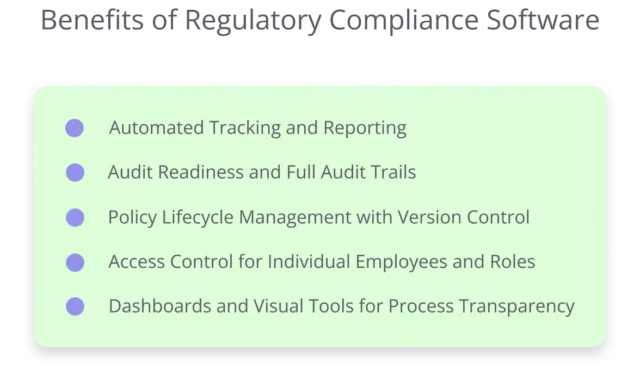
Typically, these features include automated tracking, audit readiness, and reporting tools, for instance. They also provide a way to create, approve, and distribute policies for internal or external use, complete with version control and changelogs, that help companies stay compliant while also providing full audit trails.
At the same time, the platform will often provide a set of different dashboards, graphs, reports, and other visual tools that help aid the understanding and accountability of each individual process and requirement. This data can be reviewed at any given time, while each employee can be assigned a unique level of access, making it easy to ensure transparency across different teams while also controlling the flow of information.
Identifying Organizational Needs
Before selecting a compliance management solution, it is necessary to first identify the operational challenges and the regulatory landscape in which the company operates. Most of the available platforms are designed to be flexible and are thus able to be integrated with existing enterprise systems.
In practice, this means that companies will need to identify which key systems should be connected, such as the existing internal servers, databases and other IT infrastructure, as well as external sources for regulatory updates and audit requirements, in order to provide a complete picture of the landscape.
This process can be broken down into figuring out what regulations and standards apply to the industries and markets for the company, looking at any gaps or inefficiencies within the current compliance process, which systems and departments need access, and what kind of reporting and audit capabilities are necessary.
Key Features to Look For
Depending on the specific needs for the given organization, certain features might be more appropriate than others. There are however a number of core features that are often used by the vast majority of businesses regardless of the industries or markets, that enable an efficient daily operation and ensure a high level of compliance.
- Automated insider list management
- Centralized policy management
- Automated and compliant market sounding process
- Personal account dealing
- Confidential lists
- PDMR compliance solutions
Besides the core features, these solutions also offer a number of advanced features, that are more dependent on the specific industry of the company, and can include options such as:
- Transaction monitoring
- Portfolio compliance
- Data privacy and security modules
Due to the number of different features and options available, carefully planning out the requirements before selecting a specific compliance management tool will help the business avoid potentially costly additions or major changes down the line while keeping the overall scope as efficient and streamlined as possible.
Integrating the Compliance Management Platform
Once a list of required features, functionality and capabilities has been created, it is time to look at specific platforms on the market. Depending on the specific company in question, this might be done by collaborating with professional third-party developers or providers who can help guide the company in the right direction with their expertise and experience.
Choosing the right compliance management system software requires a technical understanding of integrating the existing IT infrastructure, such as internal servers, databases, and external data sources. This process also needs to account for seamless data transfers between the various systems while adhering to any privacy or compliance regulations that might apply.

Creating a Roadmap
It is also necessary to have a clear understanding of the requirements and limitations that current regulations and legislation impose upon the business. The software must be able to work within these frameworks to be useful and legally compliant. This is especially true for companies operating within multiple markets or industries, as the software should thus be able to accommodate the different regulations applicable.
Creating a roadmap can help visually identify the different areas that should be considered and can serve as a great overview for both management and potential third-party developers tasked with the actual implementation process. It also helps ensure that no crucial details are forgotten or left out of the initial planning stage, thus resulting in an overall smoother implementation.
Implementation
When it comes to integrating the chosen compliance program software, most companies opt for hiring specialized developers to help with the technical implementation. Due to the software’s complex nature, combined with the need to stay compliant and operate within the industry’s legal frameworks, working with experienced professionals helps reduce potential errors and accelerate the overall process.
Outsourcing this work can also function as a way of sharing the burden of responsibility, as professional developers will have a deep understanding of what is necessary in order to fulfil all the requirements, both in terms of a legal and regulatory standpoint, as well as the technical side of things. Of course, some companies might have a large enough technical and legal department with the necessary competencies in order to manage the implementation themselves.
Once the platform has been selected and a roadmap has been created, it is often necessary to involve many different departments within the company in the process. After all, compliance deals with more than just legal issues and IT, so involving HR, operations, finance, and other departments can be a great idea to ensure everyone is on the same page while also identifying potential gaps or missed opportunities before the implementation is finished.
Depending on the scale of the company and the complexity of the integration, it can be a good idea to start with a pilot program, ie. implementing the software in a single department to begin with. This makes it easier to collect feedback and tweak any parameters, before rolling out the platform across all departments.
It is also crucial to assign responsibilities and roles early in the process, as well as creating an overall implementation plan that outlines the timeline and identifies milestones so that the project can be kept on track, and that any mishaps or delays can be dealt with in a timely and appropriate manner.
Besides a dedicated project manager for the overall implementation process, a compliance liaison can help translate legal and regulatory requirements into actionable system features, while a data integrity officer is often tasked with ensuring the accuracy of data during migration and maintaining ongoing quality standards.
Sustaining and Scaling Compliance
The work is not over once the software has been successfully integrated, as companies will need to ensure onboarding and training of relevant employees, in order to get the most out of the platform. Not only will this allow the internal personnel to fully understand the features and capabilities of the system, but it will also ensure they can use the platform efficiently to manage compliance tasks and stay updated with regulatory changes.
Ongoing training and support also helps foster a company culture that puts an emphasis on compliance, ensuring that employees stay engaged and committed to upholding the requirements of the different regulations. And as these regulations evolve or change over time, it is thus necessary to continuously provide training, materials and courses in order for the employees to utilize the compliance management software system to its fullest.
Scaling for the Future
As the business grows over time, the regulatory demands can also change or evolve alongside. Therefore, these software compliance platforms are rarely ever set in stone, but should be considered dynamic systems that also change over time, adapting to new regulations and requirements.
It is often a good idea to schedule an annual review of the overall process and system, to determine whether the software still functions as necessary, or perhaps requires updates to stay aligned with the shifting regulatory landscapes, as well as the internal workflows and processes within the company itself.
Conclusion
Any business operating within heavily regulated industries can greatly benefit from implementing a compliance management platform, as long as the planning, implementation and subsequent maintenance are handled thoughtfully. In many cases adopting these solutions are a necessity rather than an optional extra, as the risk of non-compliance can lead to severe financial penalties, reputational damage, or even legal consequences.

EU Listing Act – Implications for MAR and Insider Lists
 Compliance Regulations & Updates
The Act was published 14 November 2024 and entered into force on 4 December 2024. Its changes to MAR are rolled out in two waves, with three different effective dates: 4 December […]
 7 min
7 min May 27, 2026
 EU Listing Act – Implications for MAR and Insider Lists
The Act was published 14 November 2024 and entered into force on 4 December 2024. Its changes to MAR are rolled out in two waves, with three different effective dates: 4 December […]
 4 minMay 27, 2026
 EU Listing Act – Implications for MAR and Insider Lists – 4 December 2024
The Act was published 14 November 2024 and entered into force on 4 December 2024. Its changes to MAR are rolled out in two waves, with two different effective dates: 4 December […]
 3 minMay 27, 2026
 Revised Conditions for Delaying Disclosure
The delay mechanism (under Art. 17(4)) is retained, but one of the three conditions has been amended. The previous condition – that delay is “not likely to mislead the public” – is […]
 4 minMay 27, 2026
 Protracted Processes: Disclosure Only on the Final Event
Under the pre-June 2026 rules: Issuers have been required to disclose inside information arising at each intermediate step of a protracted process (such as e.g. ongoing merger negotiations, a capital raise, or […]